
Issue #6: Control Is Never Random
The subtle forces that pull at your center — and the body that refuses to forget the pattern

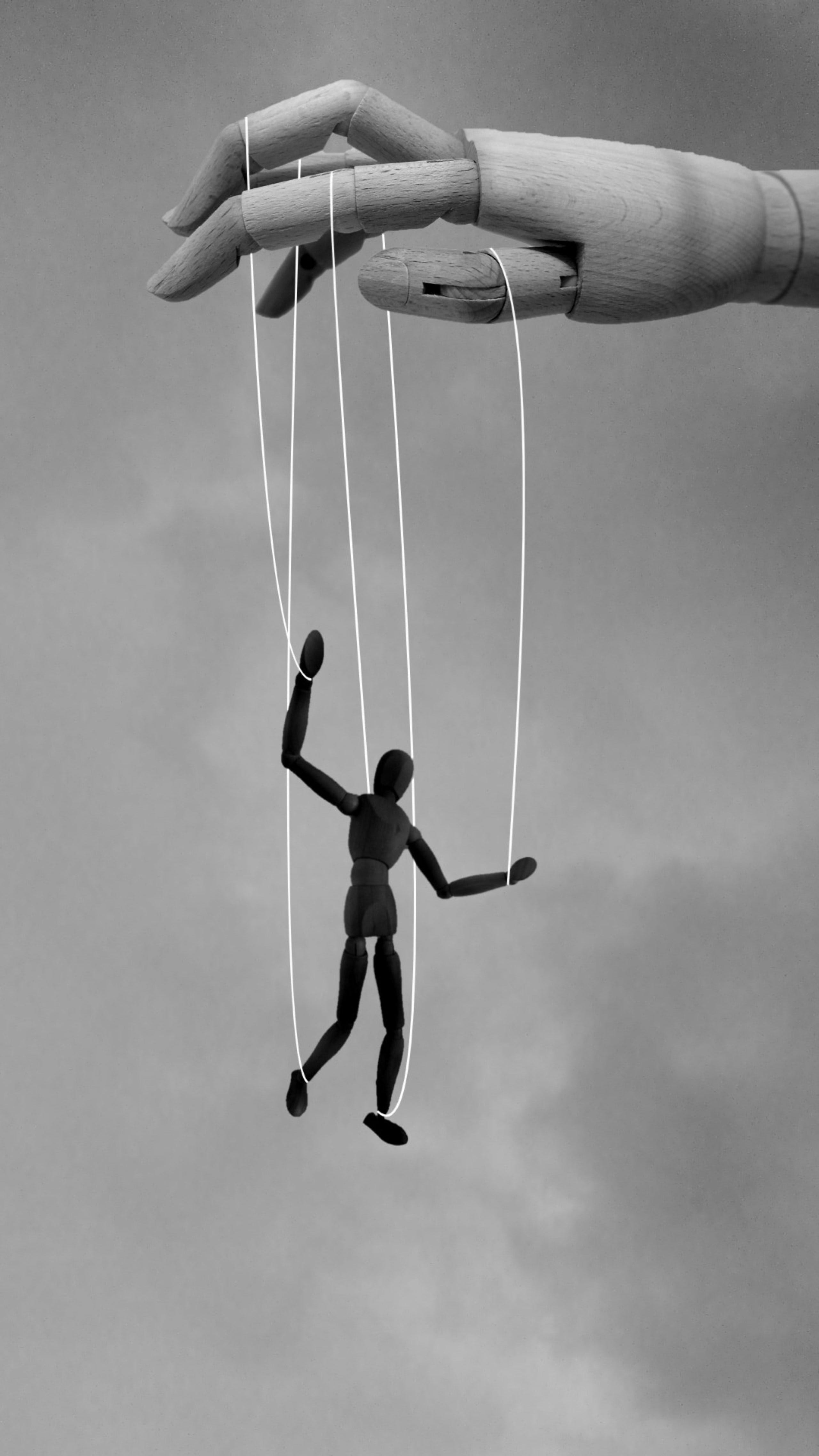
Control rarely strides in wearing a uniform and a clipboard.
Most of the time, it sneaks through the cracks as sensation:
that weird little tightening under your ribs,
your breath skipping half a count,
the sense that the energy in the room just pivoted to orbit someone else’s planet.
You’re sitting there minding your own business, and suddenly your internal weather report calls for: pressure, with a chance of minor panic later.
Maybe it’s bureaucracy doing what bureaucracy does.
Maybe it’s a humorless manager.
Maybe it’s a “friendly” helper with an agenda.
Maybe it’s that one person in a project who quietly takes the wheel and somehow doesn’t notice your hands are still on it.
Most people chalk it up to “eh, people are just jerks” or “that’s life.”
But your body is clocking something more specific.
It has a sixth sense for this stuff. It notices patterns long before your brain starts drafting speeches, justifications, or imaginary comebacks in the shower. And when enough of these control moments stack close together, it stops feeling random. You start marinating in something heavier, tighter, and a lot more familiar than “a bad run of personalities.”
It’s not conspiracy.
It’s humans doing what humans have always done with unexamined power.
These patterns are so universal you could play Control Archetype Bingo in any room with more than three adults.
The good news: once you recognize the pattern, a lot of fog clears. You stop mistaking obligation for generosity. You stop confusing dominance with leadership. You stop calling that soft chokehold of “help” anything resembling care.
What follows is a starter kit — archetypes that show up like clockwork, and the ways your body tries to tip you off.
The Enforcer
Authority as a shortcut to your compliance
Some people walk into a room already convinced there’s a ladder and they’re on the top rung — credentials or none. It might be a badge, a clipboard, a job title, or just a voice set permanently to “local judge presiding.”
The message is always the same:
“I’m the authority. You’re… not.”
Classic moves include:
Dropping “policy” with zero explanation
Switching stories when you ask direct questions
Threats implied, never spoken out loud
Borrowing your time, space, or attention under the heading of “urgent”
Riding urgency straight past your boundaries like it’s the last bus of the night
If you grew up in strict households, the military, high-control religion, or you’ve had to survive bureaucratic systems just to get basic needs met, your body has this choreography memorized.
What your body’s saying
Hyperfocus, like your attention just snapped to a point
Breath goes thin and high
Chest tightens
Shoulders creep up
That old familiar urge to over-explain yourself for things that don’t need explaining
This is “freeze with a side of anxious courtesy.”
You’re not weak.
You’re well trained.
What to notice
The first hint you’re shrinking — physically, verbally, energetically — is your cue. That little internal flinch is your nervous system flagging that the dynamic just tilted. Your job isn’t to argue them back into decency; it’s to lean out, not in.
The Benefactor
Support you didn’t ask for — with strings you definitely didn’t sign up for
Some control walks in smiling.
The Benefactor’s game is all sunny warmth, offers of help, praise, maybe lunch, maybe money, maybe visibility. On the surface, they’re one of the good ones. Underneath, there’s unwritten fine print:
“I helped you. You owe me.”
This is not the usual human give-and-take.
This is obligation cosplaying as care.
Watch for:
Offers of help that arrive one step too early or too strong
Compliments so thick they start feeling like contracts
Access that escalates quickly — more personal, more often, more intense
A noticeable chill the first time you steer your own ship instead of theirs
How it lands in your body
A vague sense of emotional debt
Hesitation to disappoint them, even when your “no” is reasonable
A low buzz of guilt that doesn’t match the actual situation
The feeling of some invisible emotional invoice hanging over you
Your body is mapping:
“There’s a claim here, and it’s got my name on it.”
When to pay attention
If someone’s “generosity” starts steering your choices more than it supports them, you’re not in a relationship — you’re on a leash.
Healthy support doesn’t demand repayment with interest.
The Usurper
Collaboration that quietly stops being collaborative
The Usurper doesn’t push. They don’t offer favors.
They just… fill all the space.
They roll in looking enthusiastic, maybe even flattering. They love your idea, your project, your community, your mission. Next thing you know, the pacing, tone, and direction all run on their engine.
Red flags:
Out-posting, out-talking, and out-contributing everyone else, all the time
Treating their ideas like “the backbone,” no matter whose ribcage this started as
Acting like slowing down is sabotage or lack of commitment
“Helping” in ways that always put them at the center of the action
They don’t steal your spotlight.
They bring enough wattage to light the whole room and accidentally blind everyone else.
What your body knows
You feel crowded in work that used to feel like your home base
You start second-guessing your own contributions
You go quiet without anyone ever telling you to
You feel oddly tired around them, like your creative oxygen thins out
It’s the funhouse-mirror version of being silenced: no one says “shut up,” but it sure feels like the subtext.
Early warning
If your own space starts feeling like somebody else’s living room, believe that architecture. That’s your boundary talking.
There are two more archetypes worth having in your vocabulary, plus the body-level framework that actually helps you stay centered when people get slippery.
Up Next:
final two archetypes
how your nervous system flags them
how to keep your center without a fight
practical tools you can actually use
Upgrade now if you want the full picture
