

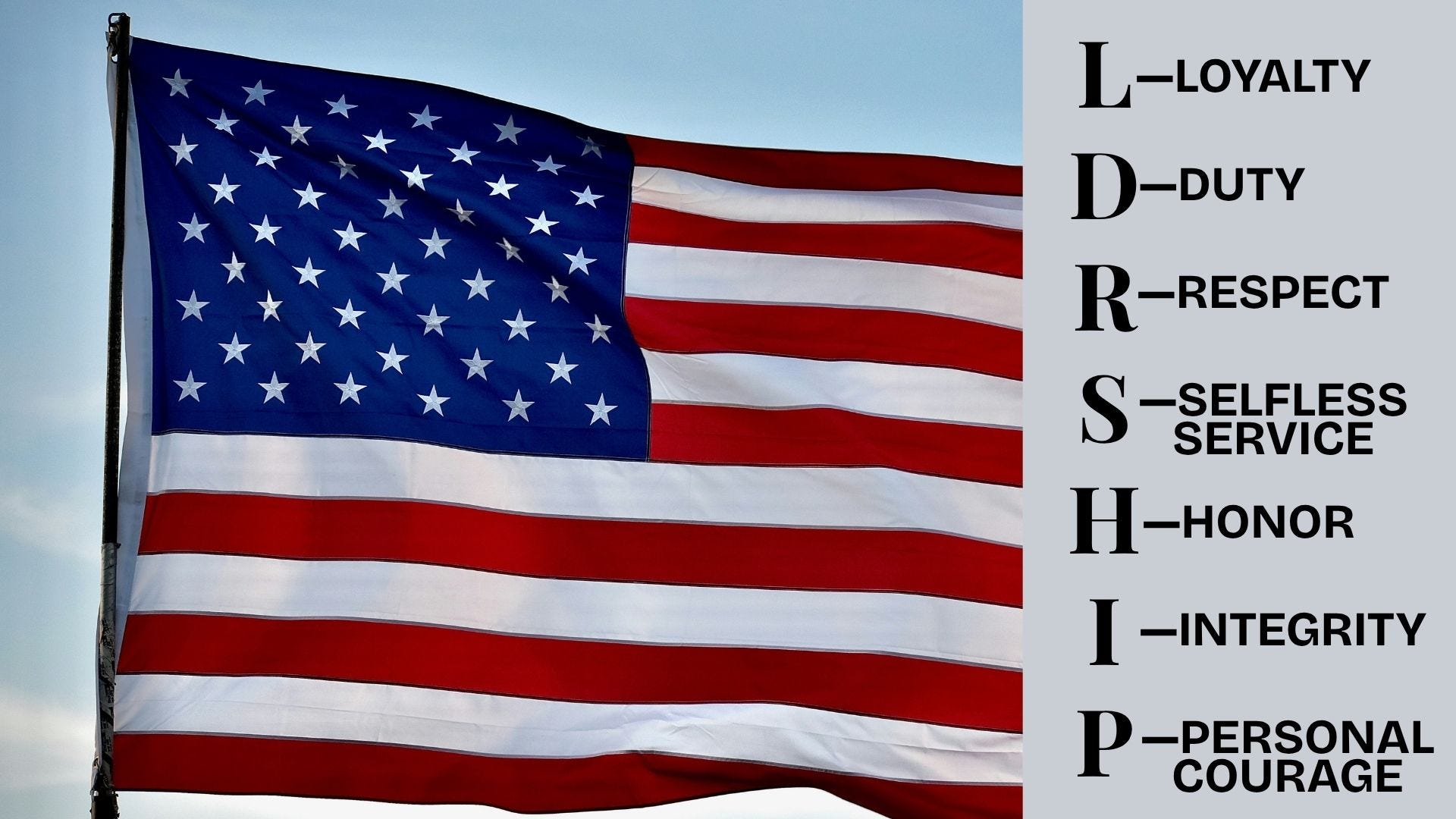
The appeals court just handed Trump the power to deploy troops into Portland against the city’s will—a ruling that reads less like law and more like surrender. We were taught that L-D-R-S-H-I-P was the moral spine of American leadership. But somewhere along the way, each of those letters was traded for something cheaper. This isn’t just politics. It’s the corrosion of the oath itself.
This isn’t a new sickness. Many of us diagnosed it years ago—back when we still thought it was politics.
The Long Slide
Executive overreach didn’t begin this week. It’s been a twenty-year creep—Patriot Act, mass surveillance, indefinite detention, presidents from both parties testing the boundaries of “national security.” Each emergency since 9/11 has poured a little more authority into the same bucket. Now that bucket is being hurled at civilians exercising their rights.
Authoritarianism rarely arrives in jackboots. It seeps in through court opinions and complacency.
When I served, we were told the uniform meant something sacred: that the oath was to the Constitution, not the man who signed the paycheck. Somewhere along the way, that oath became a brand, its letters stripped for parts and sold to the highest bidder.
I served this country for the right reasons. I’ve voted in every election since I came of age. I thought I understood what being Republican meant.
That was before loyalty became a brand and integrity a punch line.
— Liora
Back Then, I Thought I Knew
I wrote those words when I first began to see the cracks forming under the weight of hypocrisy. I had believed in small government and personal responsibility, and service above self, but I hadn’t yet seen how easily those ideals could be warped into cruelty. It took living through the gaslighting, the abuse, and the bullying—in work and in government—to recognize the pattern. What we called “politics” was actually moral corrosion, layer by layer.
That’s the real trick of authoritarianism: it sells control as safety and cruelty as clarity. It promises to shrink government—while quietly privatizing every moral obligation it once held.
When I wrote Dear Tyrant, I said we were watching a line being drawn between cruelty and compassion. We’ve crossed it. Cruelty isn’t the symptom anymore—it’s the operating system.
🔶 OVERARCHING LENS: “Policy as Practice”
From a social work standpoint, what’s happening here isn’t just political decay — it’s systems-level moral injury. When those in power abandon L-D-R-S-H-I-P, they erode the very environment people must live and heal in. Macro-level dysfunction always becomes micro-level trauma.
Social work views the individual in context: person-in-environment. So, when leadership breeds contempt, fear, or inequity, those conditions cascade down the hierarchy — to workers, families, children, veterans, clients, neighbors. Oppression isn’t an abstract evil; it’s a public-health crisis.
Our Code of Ethics demands that we “challenge social injustice.” That means calling out every policy and practice that retraumatizes the vulnerable or punishes the powerless. The corrosion of leadership values is a form of systemic violence — it shows up as housing precarity, food insecurity, underfunded care networks, and the steady normalization of cruelty.
